

Meta has recently unveiled its new augmented reality (AR) glasses, known as Orion, during the Meta Connect 2024 event in Menlo Park California. These glasses are positioned as a significant advancement in AR technology, featuring a range of innovative capabilities.

Meta Orion: Key Features and Technical Specifications
Optics and Display
- Lenses: Orion utilizes advanced silicon carbide lenses instead of traditional glass or plastic, which enhances durability and reduces weight. These lenses allow for a high index of refraction, improving light projection quality.
- Field of View: The glasses boast an impressive 70-degree field of view, which is touted as the largest in any AR glasses to date, enabling immersive digital overlays in the user’s environment.
- Micro LED Projectors: Tiny projectors are embedded in the temples of the glasses, projecting images directly into the user’s field of vision through waveguides.
Control Mechanisms
- Neural Interface: Orion can be controlled using a combination of voice commands, eye tracking, hand gestures, and a neural wristband that interprets electromyography (EMG) signals from muscle movements. This wristband allows for intuitive gestures such as pinching fingers to select items or scrolling through content.
- Hand Tracking: Users can perform actions like selecting or navigating interfaces using hand movements, enhancing interaction without needing physical buttons.
Meta Orion Hardware Components
- Glasses: The glasses weigh approximately 100 grams (3.5 ounces), making them lightweight and suitable for all-day wear.
- Neural Wristband Controller: The Orion glasses feature a neural wristband that detects muscle signals, allowing intuitive gesture control for seamless interaction with digital content without needing voice commands or visible movements.
- External Processor: Orion requires a separate processor unit (referred to as a “compute puck”) that wirelessly connects to the glasses via Wi-Fi 6, handling intensive processing tasks.
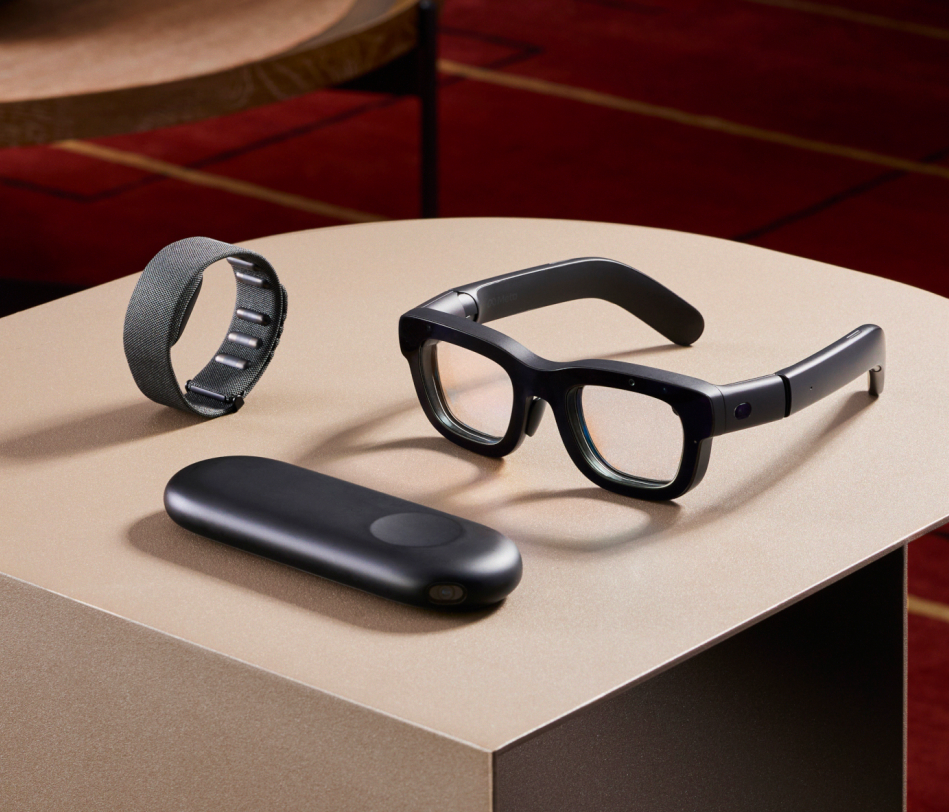
Meta Orion Camera System
- Orion is equipped with a total of seven cameras:
- Five front-facing cameras for spatial awareness and AI functionalities.
- Two inward-facing cameras to track eye movements, enhancing interaction and user experience.
Applications and Use Cases
- Orion is designed for various applications, including:
- Communication: Users can engage in video calls with holographic representations of other users.
- Entertainment: The glasses support interactive experiences such as gaming (e.g., playing Pong) and viewing multimedia content like YouTube videos.
- AI Integration: The device can utilize Meta AI to recognize objects in the environment and provide contextual information or suggestions, such as generating recipes based on visible ingredients.

Future Development
- Currently, Orion is not available for public sale; it serves primarily as a developer kit to encourage software development for future commercial versions.
- Meta aims to refine the product further, potentially reducing costs to align with high-end smartphones or laptops.
The Future?
Orion represents Meta’s ambitious vision for the future of AR technology, combining advanced optics, intuitive control mechanisms, and robust functionality into a compact form factor. While still in development, these glasses offer a glimpse into how augmented reality could enhance everyday interactions by seamlessly blending digital content with the physical world.







 Neon City Kitchen
Leave a comment